Social Unrest and Ongoing Feuding in Lipce
The PeasantsSocial Unrest and Ongoing Feuding in Lipce is a shifting condition rather than a single dispute: poverty, fights over land and work, factional village politics, and resistance to outside authority make conflict part of daily life. Lipce can act with striking unity when people believe their shared rights are threatened, but that solidarity competes with private quarrels and loyalties to local power. The result is a community capable of collective action without being at peace with itself.
Economic hardship and the pressure to quarrel
The village’s unrest intensifies under material strain. During a hard winter, at least twenty hired hands are desperate for work; potatoes have frozen for some households, money is scarce, and the coming preharvest season threatens to be especially lean. People are already eating a hot meal only once a day and going to bed hungry. Many had expected the planned felling at Wolf’s Hollow to provide employment, but the manor refuses to hire Lipce workers after a complaint was lodged against it with the commissioner. The loss of expected wages makes the forest dispute a question of immediate subsistence as well as rights.
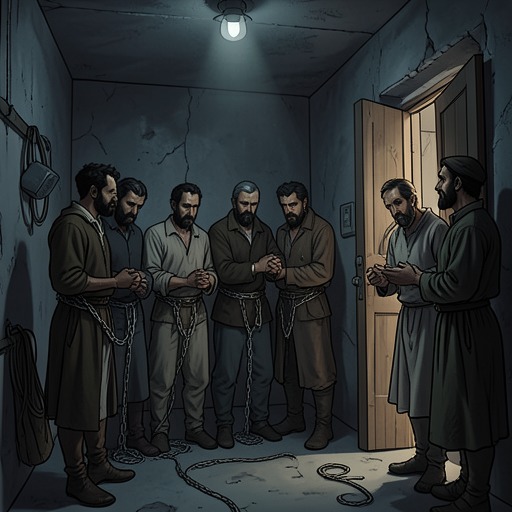
The damage reaches beyond those seeking work. A report of village hardship describes a cold cottage with straw stuffed into its windows, a single bed shared by people huddling together, and a family with no potatoes left after selling its quilt. The eldest daughter is gravely ill from hunger, while the family must beg the miller for groats because no one will lend on credit before the harvest. Elsewhere, a woman gives birth while sick, impoverished, and without milk to feed the child; her husband is among the imprisoned men, and the fields stand fallow for lack of labor. Such accounts place village quarrels beside the less dramatic, accumulating consequences of poverty: hunger, unpaid work, absent men, and vulnerable households with little prospect of relief.
Seasonal hardship also alters the village’s temper. As May draws to a close, heatwaves arrive early. Streams dry, vegetables wilt, fallow grass is seared, and potato plants that had begun well barely cover the ground. The preharvest period is harder than in previous years, and the combination of heat, trouble, and political agitation makes Lipce unusually restless. Insults and quarrels fly from morning to night. Neighbors fight over a piglet that has dug up carrots, mixed-up goslings, children, and damage to property; some disputes bring fists, others end in lawsuits, and the priest must sometimes intervene to scold and reconcile the parties. The breadth of these petty conflicts gives the unrest its everyday scale: almost anything can become a reason to challenge a neighbor.
Collective resistance over the forest
That fractiousness does not erase Lipce’s capacity for coordinated action. When the felling at Wolf’s Hollow threatens both customary claims and anticipated employment, villagers gather in the square before the inn and wait for their elders to bring Boryna. His standing matters: he is regarded as the first farmer in the village, and the assembled farmers will not proceed without him. The crowd grows until it fills the square and reaches the road. The blacksmith and the miller warn that resistance will bring imprisonment, but the villagers discount their warnings because they are believed to serve the manor’s interests.
The assembly frames the proposed felling as the latest in a series of injuries. Its appeal brings together farmers and hired hands: the manor is cutting the forest, refusing work to local people, and repeatedly driving them toward ruin, while court cases and complaints have brought no effective remedy. Boryna urges the crowd to defend what it regards as its own and to go together to stop the work. The call turns grievance into a common plan. Villagers hurry home to change clothes, harness horses, and bring out sleighs; armed with poles, pitchforks, flails, and scythes, they set out as a procession of farmers, laborers, women, and even older children.
At the clearing, the crowd confronts the woodcutters from Modlica, Rzepki, and elsewhere. Boryna leads the villagers forward and orders the workers to leave, declaring the felling forbidden. The woodcutters, intimidated by the size of the gathering and its sticks, pitchforks, and flails, collect their axes and saws and withdraw. The villagers drive them into the forest, put out the fires, dismantle the stacks of cut timber, and tear down the plank huts at the edge of the clearing. Women led by Kozłowa scatter the hut boards so that little remains. Collective action succeeds in halting the work on the spot, though the confrontation’s force also shows how readily a dispute over rights can become a physical threat.
Factional politics and contested authority
The village’s internal conflicts are no less consequential. After a brawl involving the Voyt and the Kozioł family, both sides seek witnesses and recruit support. The Voyt begins with an advantage: more than half the village speaks for him, partly because he can be useful in some matters and troublesome in others. He secures witnesses through persuasion, flattery, and vodka. Against him, Kozłowa sells her sow and piglets to pay for her husband’s medicine and repeatedly calls for witnesses outside the Voyt’s house, insisting that Bartek is dying and appealing to God and fair-minded neighbors.
Support for the Koziołs comes chiefly from the poor, more sympathetic women, and one small farmer, Kobus. Many others deny having seen anything and advise Kozłowa not to challenge the Voyt. The dispute thus exposes a familiar imbalance: the person holding village office can draw on influence and favors, while an aggrieved household struggles to turn its account into public support. The resulting arguments and skirmishes deepen the anger rather than settle the case.
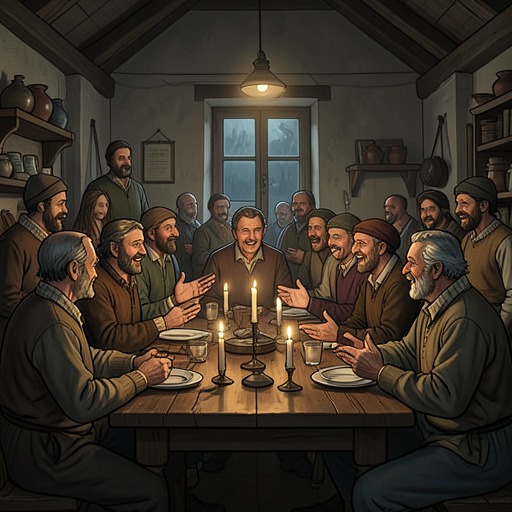
Płoszka’s opposition to the Voyt gathers force after a separate public scandal. In the inn, he presents the Voyt as a bad example and urges the villagers to remove him from office. His accusations extend beyond personal conduct: he says the Voyt has sided with the squire against the community, supported a school in Lipce, recommended German settlers in Podlesie, and used community money to support his own way of life. The allegation that public funds have become private benefit connects village authority to the wider dispute over who speaks and acts for the community. Płoszka’s listeners confer long into the night, while the Voyt’s opponents attempt to turn indignation into an organized challenge to his office.
Resistance and divisions in public life
Conflict over the proposed school reveals another limit of authority. At the school-tax meeting, most villagers are leaning against the school, but the notary’s manner assumes their obedience: he orders someone to go to the manor for fish that has not arrived. No one moves. A villager answers that they did not come to run messages. The refusal is small in form but clear in meaning: the crowd will not accept every demand simply because it comes from an official.
When the notary reads the school document, the assembly cannot understand it and calls for it to be read in their own language. Later, when the Voyt summons the gendarmes, the crowd closes around them and warns against laying a hand on anyone. The villagers then part to let the gendarmes pass, but surge after them toward the prefect, cursing and shaking their fists. Their protest gives voice to resentment at being governed through orders they cannot understand and are expected to obey. It is collective resistance, but not a settled political victory; the evidence shows the confrontation and the villagers’ refusal to submit quietly, not that their objections overturn the school proposal.
A community both united and exposed
The novel’s scenes of unrest repeatedly contrast the appearance of a unified village with the divisions inside it. At the forest assembly, the crowd waits for Boryna and moves together against the woodcutters; in the Voyt’s dispute with the Koziołs, neighbors deny what they have seen or warn the injured household not to challenge a powerful official. In periods of scarcity, a quarrel over geese or a piglet can become another lawsuit, while the larger questions of employment, land, and public authority remain unresolved.
Even the atmosphere of a village evening can register this pressure. After news concerning Jagna, the sky is blood-red beneath gathering clouds, animals behave restlessly, and people leave their cottages to whisper at fences and among neighbors. The village seems deserted of its usual laughter and singing; its inhabitants watchful, indignant, and horrified, debate what has happened. The scene shows how private conduct becomes public business, subject to gossip and collective judgment. The procession later stopping before the church likewise places village action at a charged boundary between communal punishment and sacred space. Across these episodes, Lipce’s unrest is not reducible to a single cause or faction: it is the cumulative strain of precarious livelihoods, contested rights, unequal influence, and a community that can defend common interests while turning its scrutiny and anger upon its own members.